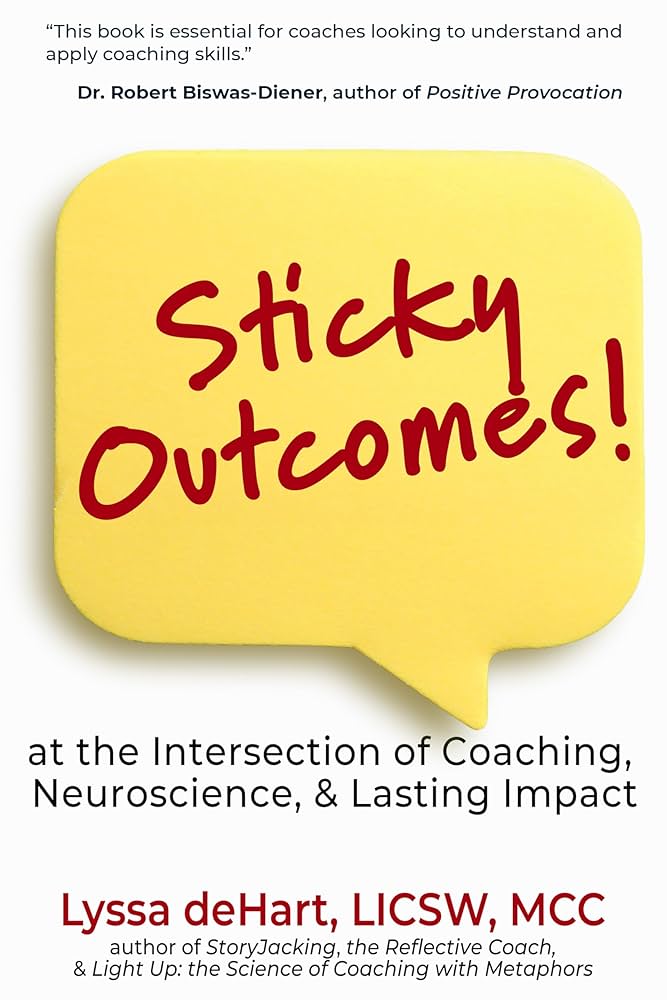
By Lyssa deHart & Jake Mannino
Published on June 2, 2026
Think about the last time you got on a plane. You didn't know the captain' name. You probably didn't even think about it. You just sat down, buckled up, and trusted that this person — a complete stranger — was going to get you from point A to point B at 600 miles per hour, 30,000 feet in the air.
And here's the thing. We do that all the time. We get in Ubers with people we've never met. We hire people based on a few conversations. We go into business with someone because something felt right. We're constantly making these leaps of faith, sometimes without even realizing that's what we're doing.
So what's actually going on when we trust someone?
It comes down to two things — and one of them surprises people.
Building trust with someone isn't rocket science, it's actually pretty simple. What you need to do is pay attention to whether their words and actions match up, and I don't just mean once or twice, I mean consistently over time. That's the key to trusting someone. When you see that what they say and what they do are always in sync, that's when you can start to feel more at ease. But when their words and actions don't add up, don't bother trying to figure out what they mean, just trust their actions. At the end of the day, words are just words, they're cheap and easy to come by, but actions, that's where the truth is. So, if someone's words and actions aren't matching up, it's their actions that will tell you what they're really about.
Here's the thing, even if you do everything by the book, you can still end up getting burned. You can check to see if someone's goals and values align with yours, you can ask for references, and you can even put them through a thorough evaluation process. But the truth is, people are unpredictable and can change. Something unexpected can happen in their personal life, and suddenly the person you thought you knew is nowhere to be found. The person who impressed you so much during the interview process may not be the same person who shows up to work six months down the line.
At this point, a different type of trust becomes much more important.
Trusting yourself.
That's the part people don't talk about enough.
When you have faith in yourself, it's not the end of the world if someone else lets you down. It's still tough to deal with, but if you trust yourself to handle the tough conversations well, you can say, "Hey, something's not adding up here. What we discussed isn't matching what's actually happening. Let's get to the bottom of this or figure out what's next." You can only have those kinds of conversations if you trust yourself to navigate them. You need to develop your communication skills and then believe that you've got the capability to handle whatever comes up, and that you'll be alright even if things don't go as planned. It's about knowing you can take care of yourself, no matter what.
A lot of what looks like trust in other people is really trust in ourselves. Do I trust myself enough to hire you? To go into business with you? To make this call? And maybe most importantly — if I'm wrong, do I trust myself to have the hard conversations or make the hard decisions? Am I okay with that? Because we are going to be wrong sometimes. That's just part of the price to play.
Trust isn't free — you're going to pay for it one way or another
There's a reason we say "pay attention." You are literally paying for your learning with your attention.
We've all been there - making a choice that didn't quite feel right, but we went ahead with it anyway. Maybe we ignored that little voice in our head because we really wanted it to work out, or maybe we were under a lot of pressure and just made the decision without fully thinking it through. Whatever the reason, we've all had to live with the consequences of our actions. And the thing is, the cost of a bad decision isn't always just about money - although it can be expensive - it's also about our time, and energy.
One probably would make a different choice, if we had different information or understanding or literally a different level of trust in ourselves. That can be a tough pill to swallow, and it's something that can stay with us for a long time.
When we pay attention to our mistakes, we can learn from them. If we really look at what went wrong, we can figure out what we missed and what we weren’t paying attention to. Then, next time something similar happens, we can do things differently. We start to notice the signs earlier and we can avoid making the same mistakes. That's what we get from learning from our experiences - we get better at recognizing patterns and making good decisions.

If your gut is telling you something — it's likely worth a listen.
We tend to treat trust like a mental calculation. Credentials, track record, references, gut check — in that order, with the gut check kind of bolted on at the end.
But we're not just walking, talking heads. We've got a head brain, yes, and we've also got a heart brain and a gut brain — and honestly, the gut might be our first brain. Science keeps pointing that direction. Those low-level signals your body sends when something feels off? That's not just anxiety. That's data coming in and your brain can aggregate that information, if it is allowed to listen to it.
The people who listen to it — who trust themselves enough to slow down and notice when something doesn't feel right even when everything looks fine on paper — they're not being paranoid. They're paying attention to the whole picture. And that tends to work out better.
So where does that leave us?
Building trust is a process that takes time and effort. We're all trying to navigate it, and the truth is, we'll probably always be learning as we go. It's not about avoiding getting hurt altogether, but about becoming better at dealing with the setbacks when they happen. The key is to learn from our mistakes and not let them dictate how we approach new situations, because holding onto past hurts can be misleading and unfair to others.
We can only do two things with the past: learn from it or let it go. Ideally we do both.
When you have faith in yourself, it's easier to trust others. You see, the more you believe in your own instincts and abilities to handle tough situations, the less intimidating it becomes to put your trust in someone else. It's like, when you know you can navigate through difficult times and are okay with making mistakes, you're more likely to open up and trust others.
That's what we're really building toward.
By Lyssa deHart, LICSW, MCC, BCC and Jake Mannino PCC, MBA for NEXGEN Executive Coaching Academy
NEXGEN Executive Coaching Academy was founded in 2026 by Lyssa deHart (LICSW, MCC) and Jake Mannino (MBA, PCC) to address a specific gap in the professional coaching education market: the absence of programs that combine ICF-credentialed coach training with practical business-building skills.
According to the World Economic Forum, over 92 million jobs may be displaced by automation by 2030 — accelerating demand for human-centered skills like executive coaching.
NEXGEN's programs are designed specifically for accomplished working professionals who want to become credentialed ICF executive coaches and build sustainable coaching businesses — without leaving their current careers to do it.
Disclaimer: This article was originally published on LinkedIn on June 2, 2026.
Original LinkedIn article: https://www.linkedin.com/pulse/trust-tuition-what-costs-leaders-nexgen-executive-coaching-academy-8rhcc/?trackingId=8H%2Bo8TBF7U6456VNUg585w%3D%3D